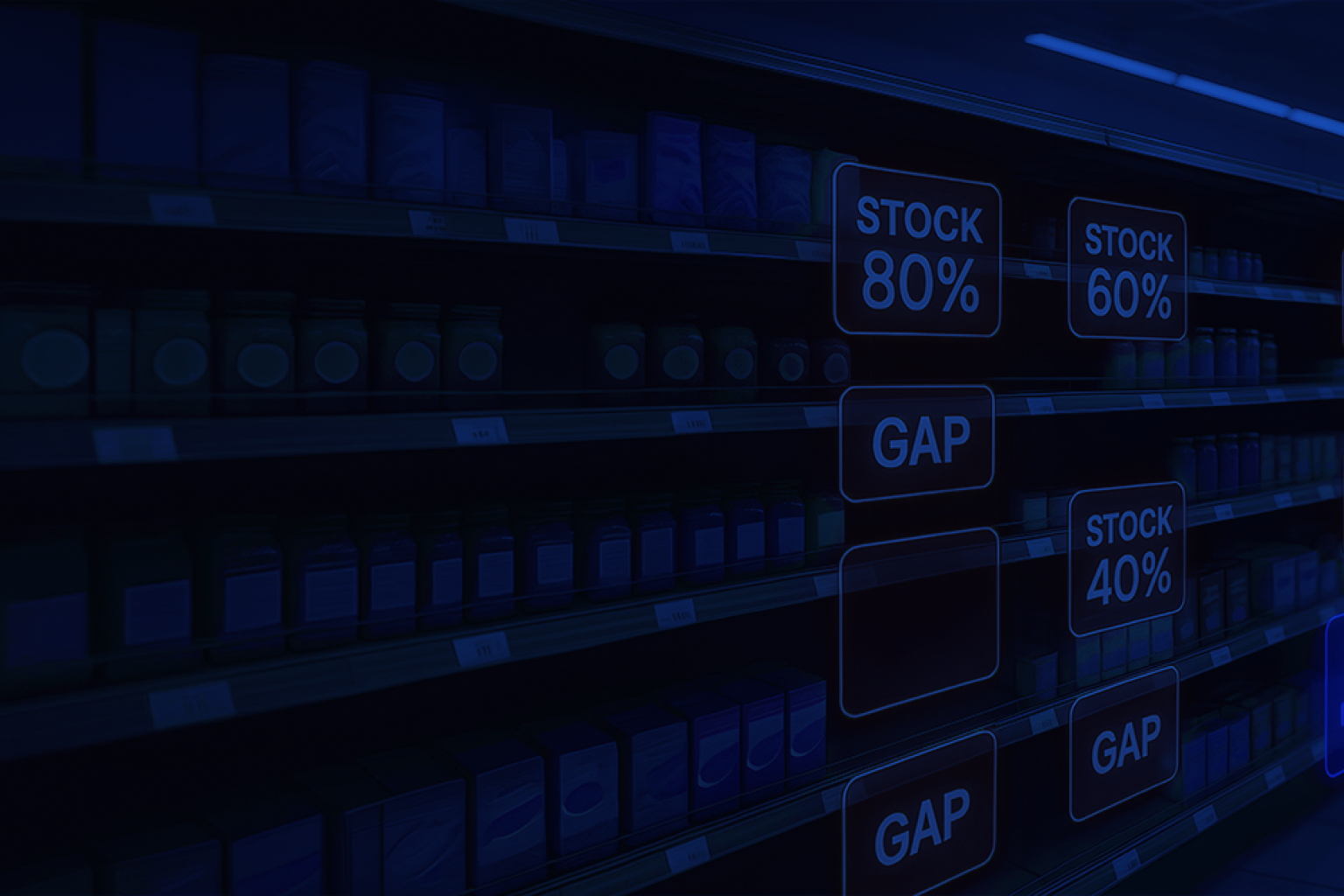
Shelf & Space Optimization Analytics

Executive Summary

Retail shelf space represents one of the most valuable and finite assets in retail and FMCG operations, yet many organizations continue to allocate this precious resource based on historical precedent, vendor negotiations, and subjective judgment rather than rigorous analytical optimization. Suboptimal space allocation leaves substantial value on the table through underperforming products occupying premium positions, high-potential items constrained by insufficient facings, and poor product adjacencies that miss cross-selling opportunities. In an era where every square foot must justify its existence, scientific shelf and space optimization has evolved from a nice-to-have capability to a strategic imperative.

DS STREAM delivers comprehensive shelf and space optimization analytics powered by advanced mathematical optimization, machine learning, computer vision, and behavioral analytics that enable retailers and FMCG manufacturers to maximize revenue, profitability, and customer satisfaction per square foot of retail space. With 150+ senior data science and analytics experts, 10+ years of proven industry experience, and deep technology partnerships with Google Cloud Platform, Microsoft Azure, and Databricks, DS STREAM applies sophisticated analytical techniques including planogram optimization, space elasticity modeling, product placement analytics, visual merchandising optimization, and store layout analytics to transform space management from an art into a science.

Our technology-agnostic approach ensures solutions integrate seamlessly with existing category management systems, planogram software, and point-of-sale platforms while leveraging modern cloud infrastructure, computer vision APIs, and optimization engines for advanced capabilities. DS STREAM’s implementations have consistently delivered 5-15% revenue per square foot improvements, 3-10% margin enhancements, and 20-40% reductions in planogram development time for clients across retail and FMCG industries.

The Shelf Space Optimization Challenge

Effective shelf and space management has become increasingly complex due to several converging factors:

Finite Resource with Infinite Demand: Retail space is inherently limited, yet manufacturers continually launch new products demanding shelf presence, categories expand with line extensions and innovation, and customer expectations for variety continue growing. This creates intense competition for shelf space requiring objective frameworks for allocation decisions rather than political negotiations or historical inertia.

Heterogeneous Space Value: Not all shelf space is created equal. Eye-level positions generate substantially higher sales than top or bottom shelves, end caps and promotional displays create dramatic sales lifts, and high-traffic aisle locations outperform back-corner placements. Understanding granular space value across store zones, fixture types, and vertical shelf positions is essential for optimization but requires sophisticated analysis most organizations lack.

Product Interdependencies: Products do not perform independently—strategic adjacencies create complementary purchasing (placing chips near salsa drives incremental transactions), while poor adjacencies create confusion or missed opportunities. Traditional space allocation optimizes individual product performance without considering these portfolio effects, leaving substantial value unrealized.

Store Format Diversity: Retailers operate diverse store formats from small urban convenience stores to large suburban supercenters, each with different space configurations, customer demographics, shopping missions, and assortment strategies. One-size-fits-all planograms fail to optimize for format-specific characteristics, yet developing hundreds of custom planograms manually is prohibitively expensive.

Dynamic Performance: Product performance evolves continuously due to seasonality, promotional activities, competitive dynamics, and lifecycle stage. Static planograms developed quarterly or semi-annually fail to adapt to these changes, resulting in space allocated to declining products while emerging opportunities are space-constrained.

Execution Complexity: Even perfectly optimized planograms deliver limited value if execution is poor. In-store compliance, planogram implementation accuracy, and maintenance of shelf conditions over time pose significant operational challenges. Many retailers discover that actual shelf configurations differ substantially from intended planograms, eroding optimization benefits.

Measurement Limitations: Traditional space management relies primarily on sales per linear foot or sales per cubic foot metrics. While useful, these measures fail to capture profitability differences, inventory turn variations, customer satisfaction impacts, and strategic category roles. More sophisticated measurement frameworks are required for truly optimal decisions.

DS STREAM’s Comprehensive Space Optimization Framework

DS STREAM’s shelf and space optimization solutions combine mathematical optimization, machine learning, behavioral analytics, and computer vision to deliver data-driven space management strategies that maximize business objectives while respecting operational constraints and strategic priorities.

Planogram Optimization and Shelf Space Allocation

Planogram development represents the core of space management—determining which products receive shelf presence, how many facings each product receives, which shelf positions they occupy, and how products are arranged relative to each other. DS STREAM employs sophisticated optimization frameworks:

Mathematical Optimization Models: We formulate planogram development as constrained optimization problems that maximize objective functions (revenue, profit, weighted combinations) subject to numerous constraints:

Fixture Constraints: Physical dimensions of shelving units, gondolas, and displays including height, width, depth limitations and structural constraints

Product Constraints: Minimum and maximum facing requirements ensuring adequate representation and preventing excessive space allocation

Category Constraints: Minimum space allocation ensuring categories receive sufficient presence for role requirements

Adjacency Rules: Products that must be placed together (complementary items) or must be separated (competing subcategories)

Vertical Position Rules: Products appropriate for eye-level, reach-level, stoop-level positions based on target demographics and product characteristics

Flow and Navigation: Logical product progression and category flow that aligns with customer shopping patterns

Merchandising Standards: Brand blocking requirements, facing uniformity rules, price point progression standards

We employ advanced optimization solvers including Gurobi, CPLEX, and custom heuristics to determine globally optimal or near-optimal planograms across thousands of products and hundreds of shelf positions. For complex problems, we develop hierarchical optimization approaches that first optimize category-level space allocation, then optimize within-category product placement, balancing solution quality with computational tractability.

Space Elasticity Modeling: Understanding how sales respond to space allocation changes is fundamental to optimization. Space elasticity quantifies the percentage sales change resulting from 1% space change. DS STREAM employs econometric techniques to estimate space elasticity:

Panel Regression Models: Exploiting natural variation in space allocation across stores and time to estimate causal space effects while controlling for confounding factors including store characteristics, market conditions, and promotional activities

Quasi-Experimental Methods: When available, analyzing planogram resets as natural experiments, comparing performance before and after space allocation changes

Diminishing Returns Modeling: Space elasticity exhibits decreasing returns—initial facings generate large sales increases while incremental facings beyond a threshold deliver minimal benefit. Our models capture non-linear space-sales relationships informing optimal facing allocation

For Lorenz Polska, our work included substitute and complement identification leveraging correlation and semantic analysis to understand purchase affinities and optimal shelf adjacencies. This informed planogram recommendations that maximized category performance through strategic product placement creating cross-category purchases.

Store Clustering for Planogram Development: Developing unique planograms for each store is impractical, yet single master planograms ignore store diversity. DS STREAM employs clustering algorithms to group stores with similar characteristics enabling customized planogram sets:

Fixture-Based Clustering: Grouping stores by shelf configurations, gondola layouts, and physical space dimensions ensuring planograms fit available space

Demographic Clustering: Grouping stores by customer demographics, income levels, and purchase preferences enabling assortment and space allocation matching local preferences

Performance-Based Clustering: Grouping stores by category performance patterns, enabling space allocation optimized for local category roles

K-Means, hierarchical clustering, and DBSCAN algorithms process multiple data dimensions to create actionable store clusters balancing homogeneity (stores within clusters are similar) with cluster count manageability (limited number of distinct planogram sets).

Product Placement Strategies and Behavioral Analytics

Beyond determining space allocation, strategic product placement significantly impacts performance through multiple mechanisms:

Vertical Shelf Position Optimization: Products at eye level (typically 48-60 inches from floor) generate substantially higher sales than products on top or bottom shelves, with research indicating eye-level positions selling 2-3× more than bottom-shelf positions for identical products. However, not all products benefit equally from prime positioning:

Destination Items: Products customers actively seek may perform adequately in less prominent positions, freeing premium space for impulse or discovery items

Demographic Targeting: Eye level varies by customer demographic—children’s products should be placed at child eye level, while products targeting elderly customers may perform better at slightly higher positions reducing need to bend

Package Design: Products with strong visual branding and recognition may overcome position disadvantages more successfully than generic or small-print items

DS STREAM analyzes historical performance across shelf positions to quantify position effects by product category, developing placement strategies that allocate premium positions to products with highest incremental benefit.

Horizontal Placement and Traffic Flow: Customers typically shop from perimeter to center and from right to left in each aisle. Premium horizontal positions at aisle ends, perimeter locations, and right side of shelves command significant premiums. We employ customer traffic analytics from mobile data, beacon tracking, or manual observation studies to:

Identify High-Traffic Zones: Quantifying customer exposure across store locations to inform premium space valuation

Optimize Aisle Positioning: Placing destination categories that drive traffic strategically to pull customers through store and maximize exposure to other categories

Design Category Sequence: Ordering categories along aisles to align with shopping mission and purchase sequences

Adjacency Optimization: Strategic product adjacencies create sales lift through multiple mechanisms:

Complementary Purchasing: Placing naturally complementary products together (pasta and pasta sauce, chips and dip, shampoo and conditioner) increases probability of multi-item purchases

Solution Selling: Organizing products by use occasion rather than traditional categories (gathering all grilling items together during summer rather than separating by product type) simplifies solution finding

Cross-Category Merchandising: Strategic placement across traditional category boundaries (placing wine near cheese, batteries near toys) captures purchase occasions traditional layouts miss

Subcategory Blocking: Within categories, grouping by flavor profiles, usage occasions, or price tiers helps customers navigate and increases satisfaction

DS STREAM employs market basket analysis identifying product pairs and groups with high co-purchase rates, semantic analysis understanding product relationships, and A/B testing validating adjacency hypotheses to develop evidence-based placement strategies.

Visual Merchandising Analytics and Optimization

Visual merchandising encompasses aesthetic, ergonomic, and psychological aspects of product presentation. DS STREAM applies behavioral science, computer vision, and A/B testing to optimize visual merchandising:

Computer Vision for Planogram Compliance: Ensuring planograms are executed as designed is critical but traditionally requires labor-intensive manual audits. DS STREAM implements computer vision solutions using smartphone cameras, in-store cameras, or robotic systems to:

Automated Compliance Detection: Computer vision models trained on product images detect planogram compliance, identifying out-of-stock conditions, misplaced products, and incorrect facings

Real-Time Alerts: Immediate notifications to store personnel when compliance issues are detected, enabling rapid correction

Compliance Scoring: Quantitative compliance metrics at store, region, and chain levels supporting accountability and continuous improvement

Execution Analytics: Identifying systematic compliance challenges (specific products frequently misplaced, categories with chronic issues) informing planogram simplification and training needs

Color and Visual Flow Optimization: Visual harmony and progression influence shopping experience and purchase behavior. We analyze:

Color Blocking: Grouping products by color creates visual impact and aids navigation, particularly in categories where color indicates flavor or variant

Visual Weight Balance: Distributing visually heavy items (large packages, dark colors) to avoid sections appearing cluttered or overwhelming

Sight Lines: Ensuring key products and promotional displays are visible from main traffic aisles to maximize exposure

Shelf Signage and Communication: Price tags, promotional flags, category signage, and wayfinding elements significantly impact customer behavior. DS STREAM evaluates through A/B testing and eye-tracking studies:

Signage Effectiveness: Which signage formats, sizes, and positions drive highest customer engagement and purchase response

Information Hierarchy: Optimal balance between information density and visual simplicity preventing overwhelming customers

Digital Signage Integration: For stores with digital shelf labels or displays, optimizing content, messaging, and update frequency

Store Layout Optimization and Category Flow

Beyond individual planograms, overall store layout significantly impacts customer traffic patterns, category performance, and total store sales:

Traffic Flow Modeling: Understanding customer movement patterns through stores enables strategic layout decisions. DS STREAM employs multiple techniques:

WiFi and Beacon Tracking: Anonymous tracking of mobile device movement patterns revealing traffic flows, dwell times, and navigation patterns

Computer Vision Analytics: Camera-based tracking systems (privacy-preserving) quantifying traffic patterns throughout store

Path Analysis: Identifying common shopping paths, bottlenecks, under-visited zones, and typical entry/exit patterns

Category Placement Optimization: Strategic category positioning influences total store performance:

Destination Category Positioning: Placing destination categories (products driving store choice—fresh produce, meat, dairy) at store perimeter or rear pulls customers through store maximizing exposure to other categories

Complementary Category Adjacency: Placing related categories near each other (baking products, spices) facilitates multi-category purchases and trip consolidation

Impulse Category Positioning: Placing impulse categories near checkouts, high-traffic corridors, or complementary destinations captures spontaneous purchases

Checkout Zone Optimization: The checkout area represents premium impulse purchase territory. DS STREAM optimizes:

Product Selection: Identifying highest-performing impulse products through analysis of add-on purchase rates, margin contribution, and category role

Display Configuration: Optimal fixture types, facing counts, and positioning within checkout zone

Queue Merchandise: For stores with extended queue areas, strategic product placement captures wait-time browsing

Seasonal and Promotional Space Management

Space allocation must adapt to seasonal demand shifts and promotional activities:

Seasonal Space Reallocation: Category importance varies seasonally (sunscreen peaks in summer, cold remedies in winter). DS STREAM develops dynamic space allocation strategies:

Seasonal Space Plans: Category space allocation varying across seasons reflecting demand patterns

Transition Timing: Optimal timing for seasonal transitions balancing demand curves with execution practicality

Seasonal Product Rotation: Within-category product rotation emphasizing seasonal variants at appropriate times

Promotional Display Optimization: Promotional displays including end caps, free-standing displays, and promotional islands generate significant sales lift but consume valuable space. We optimize:

Display Location: Where in store to position promotional displays maximizing traffic exposure

Display Type: Which fixture types (end caps, floor displays, power wings) deliver highest ROI by category

Product Selection: Which products benefit most from promotional display placement accounting for product characteristics and promotional depth

Display Duration: Optimal display duration balancing sales lift against display fatigue and opportunity cost

Technology Platforms and Analytical Tools

DS STREAM’s shelf and space optimization solutions leverage advanced technologies:

Optimization Engines: Gurobi, CPLEX, PuLP for mathematical optimization, planogram development, and space allocation

Machine Learning Platforms: Google Vertex AI, Azure Machine Learning, Databricks for predictive modeling, clustering, and pattern recognition

Computer Vision: Google Cloud Vision API, Azure Computer Vision, custom TensorFlow/PyTorch models for planogram compliance detection and visual merchandising analysis

Cloud Data Platforms: Google BigQuery, Azure Synapse Analytics, Databricks Lakehouse for large-scale sales data analysis, space performance analytics, and integration

Planogram Software Integration: APIs and integration with JDA Space Planning, Galleria, Nielsen Spaceman, and other commercial planogram tools

Visualization: Tableau, Power BI, custom dashboards for space performance analytics, planogram visualization, and compliance reporting

Programming Languages: Python (pandas, NumPy, scikit-learn, PuLP, OpenCV), R, SQL for analytical development

Our technology-agnostic approach leverages existing planogram tools and infrastructure where appropriate while introducing modern cloud and AI capabilities for advanced optimization and automation.

Measurable Business Outcomes

DS STREAM’s shelf and space optimization solutions deliver quantifiable value:

Revenue per Square Foot Improvement: 5-15% increases in revenue per square foot through optimal space allocation, strategic placement, and improved assortment-space alignment

Margin Enhancement: 3-10% gross margin improvements through preferential space allocation to higher-margin products and reduced space waste on underperformers

Planogram Development Efficiency: 20-40% reductions in planogram development time through optimization automation, store clustering, and systematic processes

Compliance Improvement: 15-30% improvements in planogram compliance rates through computer vision monitoring, simplified designs, and execution analytics

Customer Satisfaction: Enhanced shopping experience through logical product organization, improved navigation, and better product findability

Inventory Efficiency: 5-10% inventory reductions through right-sized facings preventing overstock while maintaining availability

Real-World Application: Lorenz Polska Category Management

While DS STREAM’s engagement with Lorenz Polska focused primarily on assortment optimization, demand forecasting, and category management, several components directly informed shelf space strategy:

Substitute and Complement Identification: Leveraging correlation and semantic analysis, we identified product relationships including substitutes and complements. Understanding these purchase affinities informed recommendations for optimal shelf adjacencies that maximize cross-category purchases and category performance. Strategic placement of complementary products together increases basket size and customer satisfaction.

SKU Portfolio Optimization: Linear and quadratic optimization algorithms balanced multiple objectives including shelf efficiency. By optimizing SKU portfolios for space productivity, we ensured limited shelf space was allocated to products with highest return on space invested.

Customer Segmentation for Store Clustering: K-Means, DBSCAN, and hierarchical clustering created actionable customer segments revealing distinct purchase patterns. These insights enable customized assortments and space allocation for different retail partners matching their specific customer bases and store formats.

Data-Driven Category Management: The comprehensive analytical platform created single source of truth for category decisions including space allocation, enabling evidence-based negotiations with retail partners about optimal space allocation and planogram design.

Sandra Lemańska, Category Manager at Lorenz Polska, confirmed: “DS STREAM significantly improved the efficiency of our category management processes and enhanced the precision of our business decisions, delivering measurable sales growth and a competitive advantage.”

Implementation Methodology

DS STREAM follows a structured yet flexible implementation approach:

Phase 1: Assessment and Strategy (4-6 weeks) - Current space management process evaluation - Planogram analysis and performance assessment - Store format and fixture inventory - Opportunity quantification and success metrics definition

Phase 2: Data Foundation (6-8 weeks) - Sales data integration at SKU-store-week level - Planogram data extraction and standardization - Store attribute data consolidation - Space performance baseline establishment

Phase 3: Analytical Model Development (8-12 weeks) - Space elasticity modeling and validation - Store clustering algorithm development - Product placement analysis and adjacency mapping - Optimization model formulation and testing

Phase 4: Optimization Engine Development (8-12 weeks) - Mathematical optimization model implementation - Constraint modeling and business rule integration - Scenario analysis and what-if capabilities - Integration with existing planogram tools

Phase 5: Pilot Implementation (8-12 weeks) - Pilot category or store format selection - Optimized planogram development and validation - Pilot execution and performance monitoring - Refinement based on business feedback and results

Phase 6: Scaling and Operationalization (12-16 weeks) - Expansion across additional categories and formats - Process integration and workflow automation - Compliance monitoring system deployment (if computer vision included) - User training and change management

Phase 7: Knowledge Transfer (ongoing) - Comprehensive training on optimization tools and interpretation - Documentation of methodologies and operating procedures - Advisory support for optimization and expansion - Best practice sharing and capability building

Expertise and Industry Leadership

DS STREAM’s shelf and space optimization expertise is built on:

Deep Technical Expertise: 150+ senior data scientists and engineers with 10+ years average experience in optimization, machine learning, computer vision, and analytics

Industry Specialization: Extensive retail and FMCG space management experience since 2017 across multiple categories, formats, and geographies

Technology Partnerships: Certified partnerships with Google Cloud Platform, Microsoft Azure, and Databricks providing access to cutting-edge optimization, ML, and computer vision capabilities

Proven Methodologies: Implementation frameworks refined across numerous engagements, balancing analytical rigor with practical business application and operational feasibility

Research and Innovation: Continuous investment in emerging techniques including deep learning for planogram compliance, reinforcement learning for dynamic space allocation, and generative AI for planogram design

FAQ

How much improvement can typically be achieved through shelf space optimization?

Improvement magnitude depends on current space management sophistication and optimization opportunity. Organizations with limited analytical approaches typically achieve 8-15% revenue per square foot improvements, while analytically mature organizations may achieve 3-7% improvements through incremental optimization. Margin improvements of 3-10% are common through preferential space allocation to higher-margin products. Even modest improvements generate significant value given the revenue flowing through retail space.

What data is required for shelf and space optimization?

Core data requirements include SKU-level sales data by store and time period, current planogram data including product locations and facing counts, product master data including dimensions and characteristics, and store fixture data including shelf dimensions and configurations. Enhanced analysis benefits from product cost data for margin optimization, customer transaction data for basket analysis, and traffic flow data for placement optimization. DS STREAM’s assessment evaluates available data and designs solutions that deliver value given existing data while creating enhancement roadmaps.

How do you measure planogram compliance and execution quality?

Traditional planogram compliance measurement relies on manual audits by store personnel or field representatives—labor-intensive, infrequent, and potentially biased. DS STREAM implements computer vision solutions using smartphone cameras that store personnel or field teams aim at shelves, automatically detecting compliance issues including out-of-stocks, misplaced products, and incorrect facings. This enables frequent, objective compliance measurement at scale. For organizations not ready for computer vision, we develop efficient audit sampling frameworks and self-reporting tools that balance accuracy with effort.

How frequently should planograms be updated?

Optimal reset frequency balances benefits of current assortment and space allocation against costs of planogram development and store execution. Most categories benefit from 2-4 resets annually aligned with seasons or major promotional periods. Fast-moving categories with frequent innovation may warrant more frequent updates, while stable categories may require only annual resets. DS STREAM helps organizations develop category-specific reset calendars optimizing the tradeoff between currency and execution costs.

Can space optimization work for small-format stores or limited assortment retailers?

Yes. While large-format stores with extensive assortments offer more optimization degrees of freedom, small-format stores and limited assortment retailers also benefit significantly. Space is even more precious in constrained environments, making optimal allocation more critical. DS STREAM tailors approaches to business scale and complexity, focusing on highest-impact decisions and streamlining methodologies appropriate to business context. Smaller retailers often achieve faster time-to-value due to less complex data environments and more agile decision-making.

How do you balance space optimization with vendor relationships and slotting fees?

Vendor relationships and slotting fees represent legitimate business considerations in space allocation. DS STREAM’s optimization frameworks can incorporate vendor agreements as constraints ensuring contractual obligations are respected while optimizing within allowable flexibility. We also quantify the opportunity cost of vendor agreements in terms of foregone revenue or margin, informing future negotiations with data-driven value analysis. The goal is evidence-based space decisions that balance multiple objectives including vendor relationships, customer satisfaction, and business profitability.

How do space optimization solutions integrate with existing planogram software?

DS STREAM designs solutions to integrate with existing planogram tools including JDA Space Planning, Nielsen Spaceman, Galleria, and other commercial platforms. Integration approaches vary based on tool capabilities—some enable API integration for automated planogram import/export, while others require file-based interfaces. We work closely with category management teams and IT to ensure integration fits existing workflows while introducing advanced optimization capabilities. Our goal is enhancing rather than replacing existing tools and processes.

What is the ROI and payback period for space optimization initiatives?

ROI varies based on starting space management sophistication and implementation scope. Typical revenue per square foot improvements of 5-15% combined with margin enhancements of 3-10% generate attractive returns with payback periods of 9-15 months. Quick wins from addressing obvious space misallocations can deliver value within 3-6 months. We establish clear baseline metrics and tracking frameworks demonstrating business value throughout implementation. Even small percentage improvements generate substantial absolute value given the revenue volume flowing through retail space.

How does e-commerce impact physical store shelf space optimization?

E-commerce creates both challenges and opportunities for physical store space management. Challenges include reduced store traffic requiring higher productivity per customer visit and per square foot. Opportunities include physical stores evolving toward showroom models emphasizing experience and discovery over comprehensive assortment. DS STREAM’s frameworks address omnichannel dynamics including optimizing physical store space for discovery and immediate need products while complementing e-commerce assortment, designing store layouts that integrate BOPIS (buy online pickup in store) and fulfillment operations, and optimizing space allocation accounting for cross-channel customer journeys.

Can shelf space optimization address sustainability and environmental considerations?

Increasingly, yes. Sustainability considerations can be incorporated into space optimization frameworks through multiple mechanisms: preferential space allocation to products with sustainable packaging or ethical sourcing, space allocation that reduces food waste through better matching of facings to demand, optimization of space for bulk or refillable product formats, and planogram designs that reduce plastic shelf fixtures and printed signage. DS STREAM works with clients to define sustainability objectives and incorporate these as optimization criteria alongside financial metrics, enabling space strategies that balance profitability with environmental responsibility.

Other Categories

Explore Categories

Price & Promotion Analytics

Data-driven pricing and promotion optimization to enhance ROI and revenuemanagement through predictive modeling.

Demand Forecasting & Replenishment Planning

Advanced time-series forecasting and replenishment planning using machinelearning to optimize inventory and reduce stockouts.

SKU Rationalization & Category Management

AI-powered category management solutions focusing on shelf efficiency,margin improvement, and automated retail monitoring.

Assortment Optimization for Retail & FMCG

Enterprise-grade assortment optimization solutions leveraging machinelearning to help retailers and FMCG manufacturers optimize product selection and inventory.

Maximize Return on Retail Space with DS STREAM

DS STREAM’s shelf and space optimization solutions deliver measurable revenue per square foot improvement, margin enhancement, and operational efficiency through sophisticated mathematical optimization, machine learning, and computer vision capabilities.

Our 150+ senior experts, technology partnerships with Google Cloud Platform, Microsoft Azure, and Databricks, and track record of successful implementations including category management transformation for Lorenz Polska position us as the partner of choice for retail and FMCG organizations seeking space management excellence.

Contact DS STREAM today to discover how our shelf and space optimization analytics can transform your retail performance and maximize return on your most valuable physical asset—retail space.

Let’s talk and work together

We’ll get back to you within 4 hours on working days
(Mon – Fri, 9am – 5pm CET).

Dominik Radwański, data engineering expert
Dominik Radwański
Service Delivery Partner
Thank you! Your submission has been received!
Oops! Something went wrong while submitting the form.