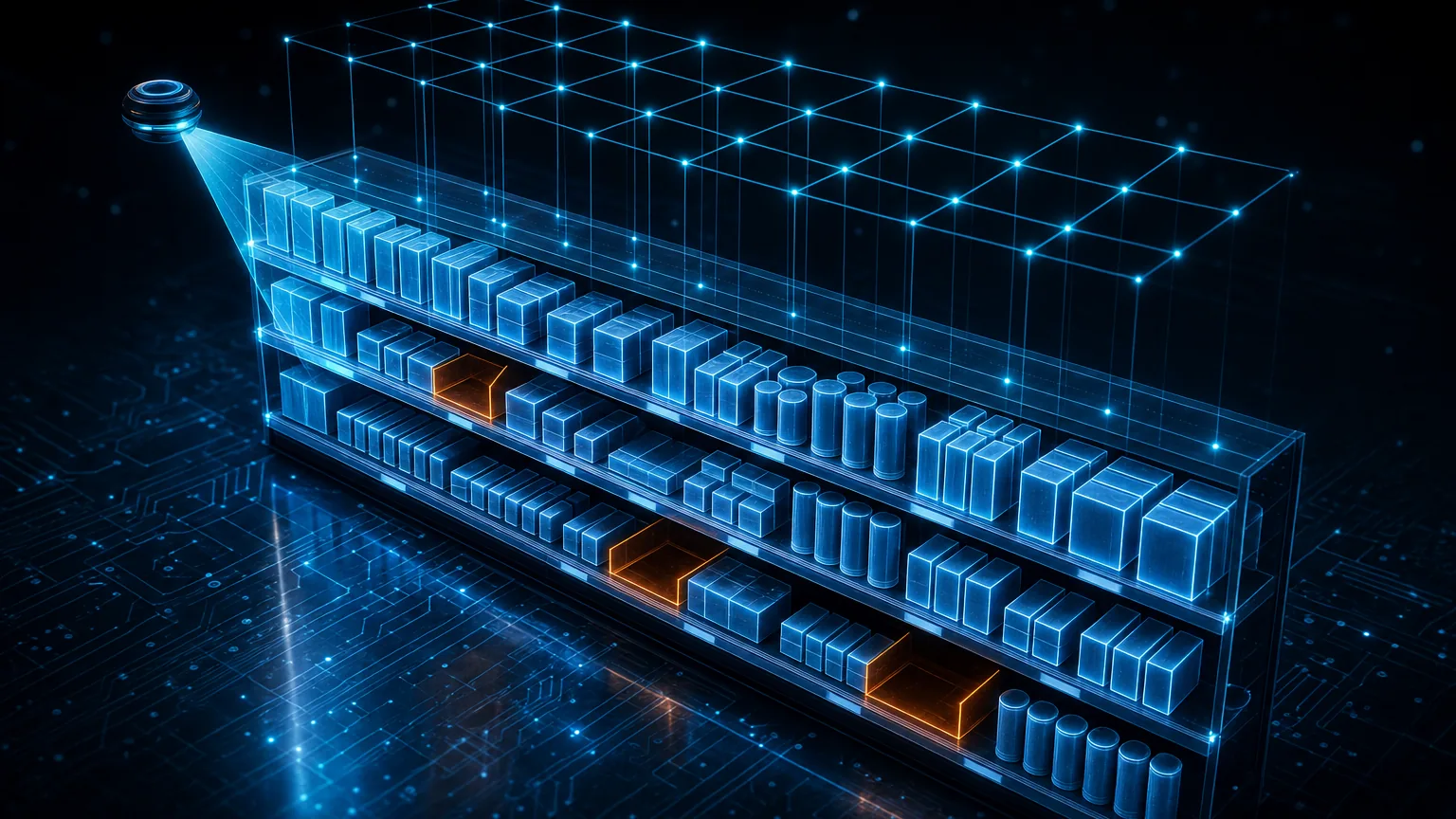
Walk into any Indian retail conversation and the same number keeps surfacing: roughly 85 percent of FMCG sales still move through general trade, spread across about 13 million kirana stores. That structure is the reason shelf execution in India is harder to measure than almost anywhere else, and it is also the reason computer vision has moved from pilot projects to core infrastructure for the brands that take distribution seriously.
The problem it solves is old and expensive. When a product a shopper wants is not on the shelf, the sale usually does not wait. It walks to a competitor or disappears. NielsenIQ estimated that US retailers alone missed about 82 billion dollars in consumer packaged goods sales in a single year because items customers would have bought were unavailable, with on-shelf availability sitting around 92.6 percent, meaning roughly a 7.4 percent out-of-stock rate. Small percentages, large money. The pattern repeats across markets, and in fragmented channels it tends to be worse, not better, because nobody is watching most of the shelves most of the time.
That is where manual audits break down. A field representative visiting 25 outlets a day cannot honestly audit each one. The time per store is too short, the number of SKUs too high, and the human temptation to check the same familiar five products at every stop too strong. Compliance scores under that model drift toward a comfortable-looking 85 percent that satisfies internal reviews while masking the real leakage on the ground. You cannot fix what you are not actually measuring.
How Shelf Image Recognition Works
The mechanics are straightforward, even if the models behind them are not. A representative photographs the shelf with a phone. Computer vision detects and classifies each facing, reads the planogram against reality, and returns a structured answer in seconds: which SKUs are present, how many facings each holds, where competitors sit, whether pricing and promotional material match the plan, and where the gaps are. Leading platforms now report 90 to 95 percent accuracy under normal field conditions, and vendors such as FieldAssist cite 92 to 97 percent category-level accuracy on the SKUs that carry the most revenue.
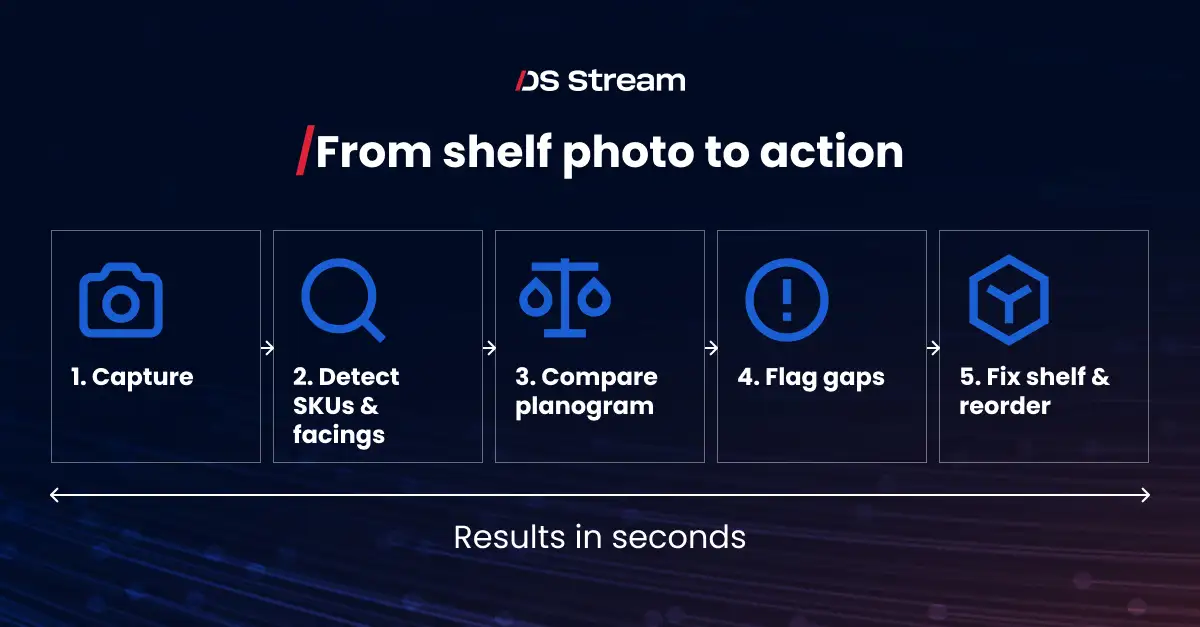
Speed is the quieter advantage. A manual shelf audit takes 12 to 15 minutes of counting and note-taking. Image recognition compresses that to under a minute for the capture, freeing the representative to do something a camera cannot: talk to the store owner, fix the display, place the reorder. In general trade, where the kirana owner makes most merchandising decisions based on what sold last week, that recovered conversation is often worth more than the audit itself.
From Audit to Perfect Store Execution
Catching an empty shelf is useful. Building a repeatable standard around it is where the money is. Perfect store execution turns availability, assortment, share of shelf, pricing, and promotion into a single composite score, measured consistently across every outlet rather than sampled unevenly by hand.
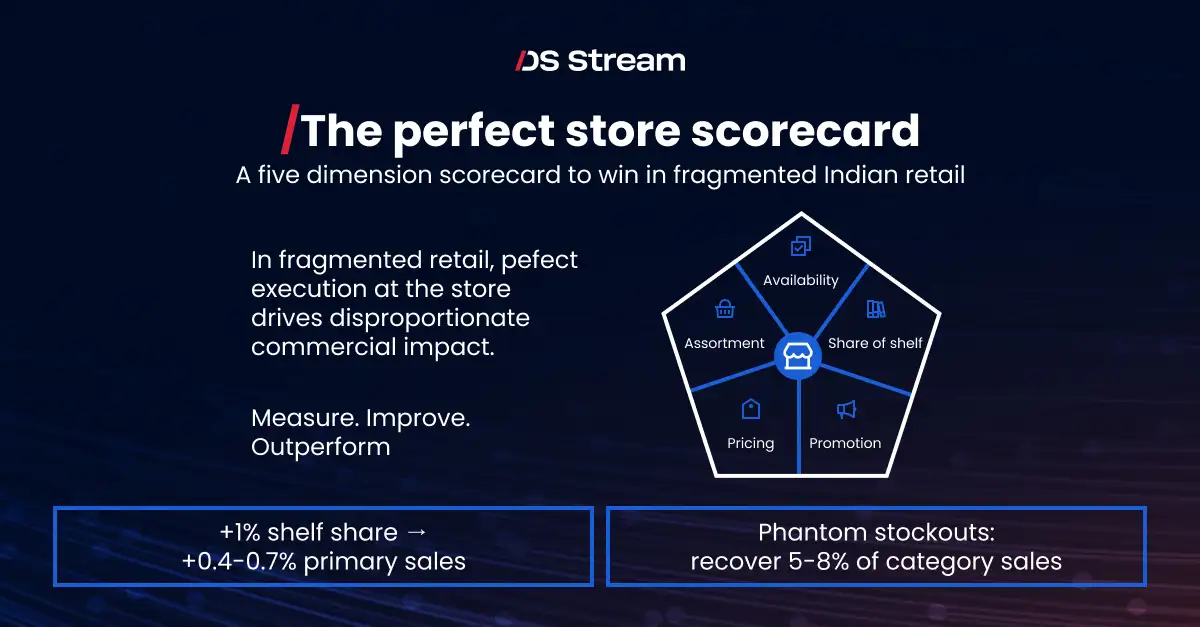
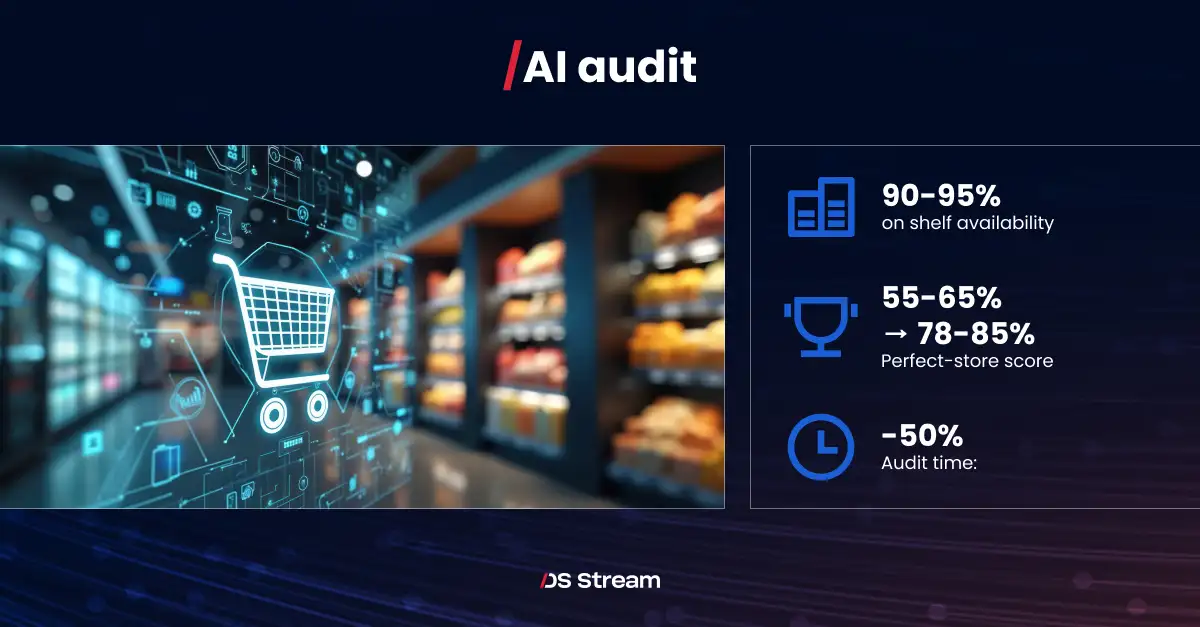
The reported lifts are meaningful. FieldAssist describes on-shelf availability climbing from a manual baseline of 78 to 82 percent to 90 to 95 percent within two quarters of AI-driven audits, and a perfect-store composite score rising roughly 20 points, from the 55 to 65 percent range to 78 to 85 percent. The commercial translation matters more than the score: a 1 percent gain in shelf share tends to correspond to a 0.4 to 0.7 percent lift in primary sales, and detecting phantom stockouts, where the system shows stock that the shelf does not, can recover 5 to 8 percent of category sales in general trade.
Vendor evidence points the same direction. ParallelDots reports a global beverages company cutting audit time by 50 percent across more than 1,000 traditional-trade outlets with on-device recognition. Trax, ParallelDots, and Infilect, along with a set of regional players, now serve much of the large CPG world, and NielsenIQ has built dedicated on-shelf availability tools around POS data for the same reason: the cost of not knowing is simply too high.
What It Takes to Get Right
None of this works as a plug-in. Accuracy depends on the SKU library staying current, which is real work in a market where pack sizes and local variants change constantly. New products need training data before the model can recognise them, and lighting, crowding, and shelf clutter in a small kirana store are less forgiving than a wide modern-trade aisle. The output also has to reach the representative during the visit, not in a report the next morning, or the recovered sale is already gone.
There is a change-management layer too. When a system measures execution honestly, compliance numbers often fall before they rise, because the flattering manual estimates were never true. Teams that expect that dip and treat the first months as a baseline reset tend to do well. Teams that panic and blame the tool tend to switch it off.
For FMCG and retail leaders looking at India, the decision is less about whether computer vision works and more about how fast to scale it across a distribution network that will stay largely fragmented for years. General trade is not disappearing; modern trade and quick commerce are growing on top of it, not replacing it. The brands that measure every shelf accurately, general and modern alike, will keep finding the sales their competitors quietly lose.
At DS Stream we help data and retail teams turn shelf imagery and POS signals into reliable, production-grade decision systems, if and when that becomes the next step.
Sources
- Grocery Dive - Empty shelves sapped retailers of $82B in CPG sales last year
- FieldAssist - Image Recognition for Retail: The 2026 CPG Standard
- NielsenIQ - Optimize Shelf Availability with the OSA Barometer
- ParallelDots - Return on Investment: Why CPG Leaders Use Image Recognition for Perfect Store Execution
- Infilect - Image Recognition Powered Retail Analytics
- Vision Group Retail - Image Recognition for Retail: How Computer Vision Is Replacing Manual Shelf Audits
- Invest India - Modernization of Kirana Stores in India


.webp)