Executive Summary
Software engineering and IT operations teams face relentless pressure to deliver higher quality software faster while managing growing technical complexity, expanding codebases, and evolving technology landscapes. DS STREAM's Generative AI solutions for software engineering and IT operations empower organizations to dramatically accelerate development velocity, improve code quality, enhance system reliability, and enable engineering teams to focus on innovation rather than routine tasks. With over 150 specialized experts and more than 10 years of proven experience in AI implementation, we enable technology organizations to transform software development and operations from bottlenecks into competitive advantages.
Our software engineering and IT operations AI solutions leverage cutting-edge generative technologies including large language models trained on vast code repositories, natural language processing for documentation, intelligent code analysis, and automated testing generation. These solutions enable automated code generation and completion, intelligent code review and quality analysis, automated documentation creation, CI/CD optimization, technical knowledge management, and proactive system monitoring. These capabilities have proven essential for enterprises across FMCG, retail, e-commerce, healthcare, and telecommunications sectors seeking to accelerate digital transformation initiatives, modernize legacy systems, and compete effectively in software-driven markets. Our technology-agnostic approach ensures seamless integration with existing development tools, version control systems, and deployment pipelines while delivering measurable improvements in development productivity, code quality, and operational efficiency.

The Software Engineering and IT Operations Challenge in Modern Enterprises
Chief Technology Officers, Vice Presidents of Engineering, and IT leaders confront unprecedented challenges in delivering quality software at the pace business demands while managing technical debt, ensuring system reliability, and attracting and retaining engineering talent. Traditional software development and operations models face several critical limitations:
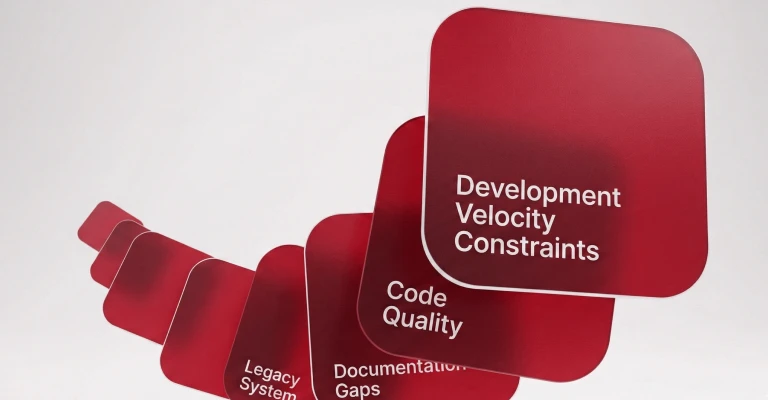
Development Velocity Constraints: Business demands for new features, products, and digital experiences outpace engineering capacity. Development teams struggle to deliver at the velocity required for competitive advantage while maintaining quality standards and managing technical debt.
Code Quality and Technical Debt: Pressure for rapid delivery often leads to shortcuts, inadequate testing, and accumulating technical debt. Poor code quality manifests as bugs, security vulnerabilities, performance issues, and increasingly difficult maintenance as systems age.
Knowledge Silos and Documentation Gaps: Critical system knowledge resides in the minds of individual engineers. Documentation lags behind code changes, onboarding new team members takes months, and troubleshooting requires locating rare experts familiar with specific system components.
Testing and Quality Assurance Bottlenecks: Comprehensive testing requires significant time and resources. Test coverage gaps allow bugs to reach production, while manual testing processes slow release cycles and drain engineering resources.
Code Review and Collaboration Inefficiency: Code reviews, essential for quality and knowledge sharing, create bottlenecks as senior engineers spend hours reviewing pull requests. Inconsistent review quality and delayed feedback slow development velocity.
Legacy System Complexity: Aging codebases written in outdated languages, lacking documentation, and understood by diminishing numbers of engineers impede innovation. Modernization efforts require massive investment and risk.
Incident Response and Troubleshooting: When production issues occur, troubleshooting requires analyzing logs, metrics, and code to identify root causes. Mean time to resolution directly impacts customer experience and business operations.
Security Vulnerability Management: Identifying and remediating security vulnerabilities requires specialized expertise and constant vigilance. New vulnerabilities emerge continuously while backlogs of known issues accumulate.
Cloud and Infrastructure Complexity: Modern cloud-native architectures involving microservices, containers, orchestration platforms, and infrastructure as code create complexity requiring specialized expertise that's scarce and expensive.
Talent Acquisition and Retention: Competition for skilled engineers drives compensation costs while routine, repetitive tasks contribute to burnout and attrition. Organizations struggle to attract and retain top engineering talent.
DS STREAM's Generative AI Software Engineering and IT Operations Solutions
Our comprehensive generative AI solutions address these challenges through intelligent code generation, automated quality analysis, documentation automation, testing acceleration, and knowledge management. We design, implement, and optimize AI systems that enable engineering teams to focus on creative problem-solving and innovation while automating routine tasks and amplifying individual developer productivity.
AI-Powered Code Generation and Intelligent Completion
DS STREAM's code generation solutions leverage state-of-the-art AI models trained on billions of lines of code across hundreds of programming languages, frameworks, and patterns. These systems function as intelligent pair programmers, suggesting complete functions, generating boilerplate code, translating natural language descriptions into working code, and adapting to your specific codebase conventions and patterns.
Context-aware code completion suggesting entire functions, classes, and code blocks based on context, naming, and patterns
Natural language to code translation converting plain English descriptions into working implementations across languages
Boilerplate and template generation automating repetitive code patterns for APIs, database models, UI components, and tests
Code refactoring suggestions identifying opportunities to improve code structure, readability, and maintainability
API integration assistance generating code to integrate with third-party APIs based on documentation
Database query generation creating optimized SQL queries from natural language requirements
Unit test generation automatically creating comprehensive test cases for functions and classes
Code translation converting code between programming languages while maintaining functionality
Framework-specific code generation creating code following framework conventions for React, Angular, Django, Spring, etc.
Infrastructure as code generation creating Terraform, CloudFormation, Kubernetes manifests from requirements
These code generation capabilities integrate directly into developer workflows through IDE plugins, eliminating context switching and providing assistance exactly when needed. The systems learn from your codebase, adapting suggestions to your naming conventions, architectural patterns, and coding standards. This results in generated code that feels native to your system rather than generic templates requiring extensive modification.
Automated Code Review and Quality Analysis
Code review remains essential for maintaining quality, sharing knowledge, and preventing defects, but traditional manual review processes create bottlenecks and inconsistent quality. DS STREAM's AI-powered code review solutions provide automated, comprehensive analysis of code changes, identifying potential issues, suggesting improvements, and freeing senior engineers to focus on architectural and design review rather than catching basic quality issues.
Automated bug detection identifying potential logic errors, null pointer risks, resource leaks, and common error patterns
Security vulnerability scanning detecting injection vulnerabilities, authentication issues, insecure configurations, and OWASP top 10 risks
Performance analysis identifying inefficient algorithms, database query issues, and code patterns that may cause performance problems
Code complexity metrics calculating cyclomatic complexity, code duplication, and maintainability indices
Style and convention checking ensuring adherence to organizational coding standards and best practices
Dependency analysis identifying outdated libraries, known vulnerabilities in dependencies, and licensing issues
Test coverage analysis identifying untested code paths and suggesting additional test cases
Documentation quality assessment checking for missing or inadequate inline documentation and comments
Architectural consistency validation ensuring changes align with system design patterns and architectural principles
Historical pattern analysis learning from past bugs and code smells to identify similar patterns in new code
These automated review capabilities integrate with pull request workflows in GitHub, GitLab, Bitbucket, and other version control platforms, providing immediate feedback to developers and flagging issues before human review. This accelerates the review cycle, improves consistency, and enables senior engineers to focus on higher-level architectural and design considerations that require human judgment and experience.
Intelligent Documentation Generation and Maintenance
Documentation typically lags behind code development, creating knowledge gaps that impede onboarding, troubleshooting, and maintenance. DS STREAM's documentation automation solutions generate comprehensive, accurate documentation directly from code, comments, and system behavior—ensuring documentation remains current as systems evolve while dramatically reducing the time engineers spend on documentation tasks.
API documentation generation creating comprehensive API references from code signatures, annotations, and comments
Code explanation generating natural language explanations of complex functions, algorithms, and code sections
System architecture documentation mapping dependencies, data flows, and component relationships across the system
Database schema documentation describing table structures, relationships, and column purposes
Configuration and deployment guides generating setup instructions, environment configuration, and deployment procedures
Troubleshooting guides creating diagnostic procedures based on common issues and resolution patterns
Release notes automation generating user-facing release notes from commit messages and pull requests
Onboarding documentation creating developer onboarding guides covering setup, architecture, and contribution guidelines
Technical knowledge base building searchable repositories of technical information, patterns, and solutions
Documentation consistency checking ensuring documentation remains synchronized with code changes
Beyond initial generation, our solutions implement continuous documentation maintenance, automatically updating documentation as code changes and flagging when documentation appears outdated or inconsistent with current implementation. This addresses the persistent challenge of documentation rot, ensuring your technical documentation remains a reliable resource rather than a source of confusion.
Technical Knowledge Management and RAG-Based Engineering Assistants
Organizations accumulate vast technical knowledge in code comments, documentation, Slack conversations, JIRA tickets, design documents, and engineers' minds. DS STREAM's RAG-based engineering assistants make this knowledge accessible and actionable by enabling natural language queries that retrieve relevant information across all technical knowledge sources, providing accurate answers grounded in your specific systems, patterns, and organizational knowledge.
These AI assistants function as institutional memory and expert colleagues, enabling engineers to quickly answer questions like "How do we handle authentication in microservices?", "What caused the database performance issue last quarter?", "Where is rate limiting implemented?", or "What's our pattern for handling async operations?" The system retrieves relevant code examples, documentation sections, previous incident reports, and architectural decisions, then synthesizes this information into clear, actionable answers with source attribution.
Accelerated onboarding enabling new engineers to become productive in weeks rather than months
Reduced interruptions allowing junior engineers to self-serve answers without disrupting senior engineers
Preserved institutional knowledge capturing expertise before engineers leave or transition
Cross-team collaboration enabling teams to discover patterns and solutions from across the organization
Incident response acceleration providing rapid access to relevant troubleshooting information during outages
Technical decision support retrieving past decisions, trade-offs, and outcomes to inform current choices
Code pattern discovery finding examples of how specific problems are solved within your codebase
Compliance and security guidance providing quick access to security policies, compliance requirements, and best practices
CI/CD Optimization and Intelligent Testing
Continuous Integration and Continuous Deployment pipelines are essential for modern software delivery, yet pipeline complexity, slow test execution, and unreliable tests create friction. DS STREAM's AI solutions optimize CI/CD pipelines through intelligent test selection, failure prediction, and automated troubleshooting, accelerating delivery while improving reliability.
Intelligent test selection running only tests likely to be affected by code changes, dramatically reducing CI/CD time
Flaky test detection identifying unreliable tests that randomly fail, enabling teams to fix or remove them
Test failure prediction analyzing code changes to predict which tests are likely to fail before running the full suite
Automated test generation creating additional test cases to cover edge cases and improve coverage
Build failure diagnosis analyzing build logs to identify root causes and suggest fixes
Pipeline optimization recommendations identifying bottlenecks and suggesting improvements to pipeline configuration
Infrastructure resource optimization right-sizing test environments and compute resources for cost efficiency
Deployment risk assessment analyzing changes to identify high-risk deployments requiring additional validation
Rollback automation detecting deployment issues and automatically triggering rollback procedures
Performance regression detection identifying code changes that negatively impact system performance
These optimizations compound over time, with each improvement in test speed, reliability, and effectiveness accelerating development velocity. Organizations typically achieve 40-60% reductions in CI/CD time while simultaneously improving test reliability and coverage.
Legacy Code Modernization and Technical Debt Reduction
Legacy systems represent both assets (proven business logic and institutional knowledge) and liabilities (outdated technology, maintenance burden, and innovation barriers). DS STREAM's AI solutions accelerate legacy modernization by automating code translation, identifying refactoring opportunities, generating comprehensive tests for legacy code, and extracting business logic understanding from undocumented systems.
Language migration translating code from legacy languages (COBOL, Visual Basic, legacy Java) to modern alternatives
Framework modernization updating applications from outdated frameworks to current versions or alternatives
Architecture transformation assistance identifying opportunities to extract microservices from monoliths
Dependency modernization identifying and updating outdated libraries and dependencies
Code quality improvement automating refactoring to improve structure, readability, and maintainability
Test harness generation creating comprehensive tests for legacy code before modernization
Business logic extraction documenting business rules and logic embedded in legacy code
Data migration assistance generating migration scripts and validating data transformations
DS STREAM's Technology-Agnostic Implementation Approach
Our technology-agnostic philosophy ensures your software engineering and IT operations AI solutions are built on the optimal technology stack for your specific requirements, development workflows, and technical environment. Rather than forcing proprietary platforms or specific tools, we evaluate and recommend the most appropriate technologies from across the AI and developer tool ecosystem.
Discovery and Current State Assessment: Comprehensive analysis of current development practices, tooling, pain points, and technical environment. We identify high-impact use cases, interview engineering teams, and establish baseline productivity and quality metrics.
Development Workflow Analysis: Evaluation of existing development workflows, IDE usage, version control practices, CI/CD pipelines, code review processes, and documentation practices. We identify integration points and workflow optimization opportunities.
Solution Design and Tool Selection: Collaborative design of AI integration architecture, selecting appropriate code generation models, code analysis tools, and documentation systems. We create detailed implementation roadmaps prioritizing quick wins and foundational capabilities.
Pilot Implementation: Deployment of selected AI solutions to a small team or specific use case. We gather feedback, measure impact, refine configurations, and validate approaches before broader rollout.
Integration and Customization: Implementation of IDE plugins, CI/CD integrations, version control hooks, and knowledge base connections. We customize models with your codebase conventions and configure quality standards aligned with your requirements.
Team Enablement and Training: Comprehensive training for engineering teams on using AI tools effectively, understanding capabilities and limitations, and integrating AI assistance into daily workflows. We create usage guidelines and best practices.
Scaled Rollout: Phased deployment across additional teams and use cases with ongoing support and monitoring. We track adoption rates, productivity metrics, and quality indicators.
Continuous Optimization: Ongoing refinement based on usage patterns, feedback, and emerging capabilities. We update models with new code patterns, expand knowledge bases, and optimize configurations for improved performance.
Industry-Specific Applications and Use Cases
DS STREAM serves enterprises across multiple sectors, each with specific software engineering challenges. Our generative AI solutions are customized to address industry-specific needs while leveraging cross-industry engineering best practices.
Retail and E-Commerce
Accelerated feature development for competitive digital experiences and omnichannel capabilities
Seasonal scalability ensuring systems handle peak loads during holidays and promotional events
Personalization engine development building and maintaining recommendation and personalization systems
Integration with numerous third-party services including payment processors, logistics, and marketing platforms
Mobile application development accelerating iOS and Android app feature development
Legacy system modernization updating outdated e-commerce platforms while maintaining business continuity
Security compliance ensuring PCI DSS compliance and protecting customer payment and personal information
Healthcare and Life Sciences
HIPAA-compliant development ensuring applications meet healthcare privacy and security requirements
Electronic health record integration connecting with various EHR systems and healthcare data standards
Telemedicine platform development building and enhancing virtual care capabilities
Clinical workflow automation digitizing and automating clinical processes
Medical device software accelerating development while maintaining regulatory compliance
Healthcare analytics systems building data pipelines and analytics for population health and outcomes
Patient portal development creating secure, user-friendly patient engagement applications
Telecommunications
Network management system development building software for infrastructure monitoring and management
Customer self-service portal development enabling digital customer experience and reducing support costs
Billing system modernization updating complex billing systems while maintaining accuracy and compliance
IoT platform development building platforms for connected devices and services
5G application development creating applications leveraging 5G capabilities
Real-time data processing implementing systems handling high-velocity network data
API development and management creating developer platforms and ecosystem capabilities
FMCG and Consumer Goods
Supply chain digitalization building systems for demand forecasting, inventory optimization, and logistics
Direct-to-consumer platforms developing e-commerce and customer engagement capabilities
Manufacturing execution systems digitizing production processes and quality management
Sustainability tracking implementing systems for environmental impact monitoring and reporting
Trade promotion optimization building analytics for promotional effectiveness and ROI
Mobile sales enablement creating applications for field sales teams
Consumer insights platforms developing systems for analyzing consumer behavior and preferences
Measurable Business Impact and ROI
DS STREAM's software engineering and IT operations AI solutions deliver quantifiable business value across multiple dimensions. Our clients consistently achieve significant improvements in development velocity, code quality, and engineering productivity following implementation of our generative AI solutions.
Developer Productivity Improvement: Code generation and intelligent completion enable developers to write code 25-40% faster while reducing cognitive load and mental fatigue. Organizations report that developers complete tasks requiring hours of coding in minutes when AI effectively handles boilerplate and routine code generation.
Code Quality Enhancement: Automated code review, quality analysis, and testing generation reduce bugs reaching production by 30-50%. Early detection and prevention of defects dramatically reduces costs compared to production bug fixes and customer impact.
Time-to-Market Acceleration: Combined productivity improvements, faster code review cycles, and optimized CI/CD pipelines reduce feature delivery time by 30-40%, enabling faster response to market opportunities and competitive threats.
Documentation Time Savings: Automated documentation generation reduces time engineers spend on documentation by 60-80%, freeing skilled resources for innovation while improving documentation quality and currency.
Onboarding Time Reduction: New engineers reach productivity 40-60% faster with AI-assisted learning, knowledge management systems, and code explanations. This acceleration dramatically improves capacity in growing organizations and reduces the impact of turnover.
Incident Resolution Speed: AI-assisted troubleshooting, intelligent log analysis, and knowledge management reduce mean time to resolution by 30-50%, minimizing customer impact and operational disruption from production issues.
Technical Debt Reduction: Automated refactoring, quality improvements, and legacy modernization assistance enable organizations to systematically reduce technical debt without dedicating entire teams to remediation projects.
Testing Efficiency Gains: Automated test generation, intelligent test selection, and flaky test elimination reduce testing time by 40-60% while simultaneously improving coverage and reliability.
Engineering Retention Improvement: Automating tedious tasks and enabling engineers to focus on creative problem-solving and innovation improves job satisfaction and retention. Organizations report 20-30% improvement in engineer retention and satisfaction scores.
Security Posture Enhancement: Automated security scanning, vulnerability detection, and best practice enforcement identify and prevent security issues earlier and more consistently than manual review, reducing security incidents by 40-60%.

The DS STREAM Difference: Why Organizations Choose Us
Successfully implementing generative AI for software engineering requires deep expertise spanning AI technology, software development practices, DevOps, and organizational change. DS STREAM brings comprehensive capabilities that ensure successful, high-impact implementations.
150+ Specialized Experts: Our team includes AI engineers, software architects, DevOps specialists, and development tool experts with deep expertise in modern software engineering practices and AI implementation.
10+ Years of Proven Experience: Extensive track record of successful AI implementations and software engineering transformations provides battle-tested methodologies and insights that accelerate value delivery.
Technology-Agnostic Approach: We recommend and implement optimal solutions for your specific technology stack and workflows rather than pushing proprietary tools, ensuring unbiased advice and best-in-class results.
Engineering Culture Understanding: Deep understanding of engineering team dynamics, developer experience priorities, and technical decision-making ensures solutions that developers actually adopt and value.
End-to-End Capabilities: From strategic assessment and solution design through implementation, integration, training, and continuous optimization—we provide complete lifecycle support.
Industry and Domain Expertise: Experience across FMCG, retail, e-commerce, healthcare, and telecommunications ensures solutions address industry-specific requirements and constraints.
Focus on Developer Experience: We prioritize developer adoption, workflow integration, and value delivery—recognizing that even sophisticated AI is worthless if developers don't use it effectively.
Partnership Approach: We view ourselves as long-term partners in your engineering transformation, providing ongoing support, continuous improvement, and strategic guidance as needs and technologies evolve.
The Future of Software Engineering with Generative AI
Generative AI technology continues to advance rapidly, fundamentally transforming software engineering. DS STREAM maintains expertise in emerging capabilities including autonomous debugging and bug fixing, natural language programming enabling non-programmers to create software, AI-driven system design and architecture generation, predictive maintenance identifying issues before they impact users, and fully automated testing including test generation, execution, and validation. Organizations that embrace these technologies now will establish engineering productivity advantages that become increasingly difficult for competitors to match. The future of software engineering involves tight human-AI collaboration where humans focus on creative problem-solving, architectural thinking, and user empathy while AI handles routine coding, testing, documentation, and quality assurance.