
Maintaining Machine Learning Model Performance Through Comprehensive Monitoring and Drift Detection
Machine learning models deployed to production environments face a critical challenge that distinguishes them from traditional software systems: performance degradation over time as the statistical properties of real-world data diverge from training data distributions. This phenomenon—known as model drift or data drift—affects virtually all production ML systems, yet many organizations lack systematic monitoring capabilities to detect degradation before business impact occurs. Models delivering exceptional performance during development can silently fail in production, generating poor predictions while appearing operationally healthy from traditional infrastructure monitoring perspectives. The resulting business impact ranges from suboptimal decisions based on degraded predictions to complete model failure requiring emergency intervention.
DS STREAM delivers comprehensive model monitoring and drift detection solutions that provide continuous visibility into model performance, data quality, and prediction behavior. Our 150+ specialists bring over 10 years of experience implementing monitoring infrastructure across FMCG, retail, e-commerce, healthcare, and telecommunications sectors—industries where model degradation directly impacts revenue, customer experience, and operational efficiency. Our technology-agnostic approach integrates with diverse ML platforms including Google Cloud, Microsoft Azure, and Databricks while implementing industry best practices for performance tracking, drift detection, automated alerting, and proactive model maintenance.
The Business Imperative for Model Monitoring
Production ML systems require fundamentally different monitoring approaches than traditional software. While software bugs manifest as errors and exceptions visible through standard monitoring, model degradation often occurs gradually without generating system-level errors. Models continue serving predictions with acceptable latency and uptime while prediction quality silently deteriorates. Without specialized monitoring, organizations discover degradation only after business impact becomes apparent—revenue decline, customer complaints, operational issues, or audit findings.
The business consequences of undetected model degradation are substantial. Revenue-impacting models like recommendation engines, pricing optimization, or fraud detection directly affect financial performance when degraded. Customer-facing models delivering poor personalization or irrelevant recommendations damage user experience and engagement. Operational models for demand forecasting, resource optimization, or predictive maintenance lead to inefficiencies and increased costs when predictions become unreliable. In regulated industries, model drift may constitute compliance violations requiring remediation and regulatory reporting.
DS STREAM's monitoring solutions address these risks through comprehensive observability spanning model performance, data quality, prediction distributions, and business metrics. Our monitoring frameworks detect degradation early, enabling proactive intervention before significant business impact occurs. Automated alerting ensures appropriate stakeholders receive timely notifications of issues requiring attention. Root cause analysis capabilities accelerate diagnosis, distinguishing data quality problems from genuine distribution shifts requiring model retraining.

Types of Model Drift and Detection Strategies
Model drift encompasses several distinct phenomena requiring different detection strategies and remediation approaches. Understanding these drift types enables appropriate monitoring design and response procedures.
Data Drift: Input Distribution Changes
Data drift occurs when the statistical distribution of input features changes from training data distributions. For example, demographic shifts in customer populations, changes in product catalog, seasonality effects, or emerging trends cause feature distributions to evolve. Data drift doesn't necessarily cause model degradation—if the relationship between features and target remains stable, models may continue performing well despite distribution shifts. However, significant data drift often indicates emerging model degradation risk requiring monitoring and potential retraining.
DS STREAM implements data drift detection through statistical tests comparing production feature distributions to training baselines. Kolmogorov-Smirnov tests detect distribution differences for continuous features, population stability index measures drift across binned distributions, Chi-square tests identify categorical feature distribution changes, and Jensen-Shannon divergence quantifies distributional dissimilarity. These tests run continuously on production traffic, with configurable sensitivity thresholds generating alerts when drift exceeds acceptable levels.
Concept Drift: Target Relationship Changes
Concept drift occurs when the relationship between features and prediction targets changes, even if feature distributions remain stable. For example, customer purchase behaviors may shift due to economic conditions, competitors' actions, or changing preferences. Fraud patterns evolve as attackers develop new tactics. Concept drift directly causes model degradation since the learned relationships no longer reflect current reality.
Detecting concept drift requires ground truth labels for production predictions, enabling comparison of predicted values to actual outcomes. DS STREAM implements concept drift monitoring through continuous performance metric calculation as labels become available, statistical tests on error distributions, cohort analysis comparing recent performance to historical baselines, and segment-specific monitoring detecting drift affecting specific populations. For scenarios where labels arrive with significant delay—common in use cases like customer churn or loan default prediction—we implement proxy metrics and indirect drift indicators enabling earlier detection.
Prediction Drift: Output Distribution Changes
Prediction drift tracks changes in model output distributions independent of ground truth availability. Sudden shifts in prediction distributions often indicate upstream data issues, pipeline bugs, or model loading errors even before ground truth becomes available. For example, a fraud detection model suddenly flagging 50% of transactions as fraudulent likely indicates a technical issue rather than genuine fraud spike.
Our prediction drift monitoring tracks output distribution statistics including mean, variance, and percentiles for regression models, class distribution for classification models, and prediction confidence scores across predictions. Anomaly detection algorithms identify unusual shifts warranting investigation. Prediction drift monitoring provides immediate feedback on model behavior without waiting for delayed ground truth, enabling faster response to certain failure modes.
Upstream Data Quality Degradation
Data quality issues in upstream systems manifest as model performance degradation. Missing values exceeding expected rates, data type mismatches, referential integrity violations, unusual value ranges, or feature engineering failures cause models to receive poor-quality inputs, producing unreliable predictions. These issues may appear suddenly due to upstream system changes or evolve gradually as data pipelines degrade.
DS STREAM implements comprehensive data quality monitoring integrated with model monitoring dashboards. Automated validation checks assess completeness, validity, consistency, and statistical properties of incoming data. Quality metrics track over time, with automated alerting when thresholds are breached. This monitoring often detects issues before model performance degradation becomes apparent, enabling proactive remediation.

Performance Monitoring and Metrics Tracking
Continuous performance monitoring provides the ground truth signal for model quality, tracking how well predictions align with actual outcomes as labels become available. DS STREAM implements comprehensive performance monitoring spanning standard ML metrics, business-specific KPIs, and segment-level analysis.
Automated Performance Metric Calculation
Our monitoring systems automatically calculate relevant performance metrics based on model type. Classification models track accuracy, precision, recall, F1 score, ROC-AUC, and confusion matrices. Regression models measure MAE, RMSE, MAPE, and R-squared. Ranking models evaluate NDCG, MAP, and MRR. These calculations occur continuously as ground truth labels become available, with metrics aggregated at multiple time granularities—hourly, daily, weekly—enabling detection of both sudden degradation and gradual trends.
Metric tracking alone provides insufficient context without baselines for comparison. We establish performance baselines from validation datasets, historical production performance, and business requirements. Current performance compares against these baselines, with alerts triggered when degradation exceeds defined thresholds. Statistical testing determines whether observed performance differences are statistically significant rather than random variation.
Business Metric Integration
Technical metrics like accuracy or AUC provide model-centric performance views but may not directly reflect business impact. DS STREAM implements business metric tracking connecting model predictions to revenue, conversion rates, customer satisfaction, operational efficiency, or domain-specific KPIs. For retail recommendation systems, we track click-through rates, conversion rates, and revenue per user. For demand forecasting, we measure inventory costs, stockout rates, and forecast accuracy's operational impact.
Business metric integration requires collaboration between data science, engineering, and business stakeholders to define meaningful metrics, instrument tracking, and establish acceptable ranges. This cross-functional approach ensures monitoring aligns with actual business value rather than purely technical considerations.
Segment-Specific Performance Analysis
Aggregate performance metrics may mask degradation affecting specific segments while overall performance remains acceptable. Model performance often varies across customer segments, geographic regions, product categories, or time periods. Segment-specific analysis identifies disparate impact, fairness issues, or localized degradation requiring targeted intervention.
Our monitoring frameworks implement automated segmentation analysis, calculating performance metrics across predefined segments and dynamically discovering emerging segments with degraded performance. This granular visibility enables precise diagnosis and targeted remediation—retraining models on specific segments, adjusting feature engineering for affected populations, or implementing segment-specific models when appropriate.
Comprehensive Monitoring Architecture and Implementation
Effective monitoring requires purpose-built infrastructure collecting prediction data, calculating metrics, detecting anomalies, and delivering insights to stakeholders. DS STREAM implements end-to-end monitoring architectures spanning data collection, processing, storage, alerting, and visualization.
Prediction Logging and Data Collection
Monitoring begins with comprehensive logging of model inputs, predictions, and outcomes. Our instrumentation captures feature values, prediction scores, timestamps, model versions, and request metadata for every prediction. For high-throughput systems generating millions of predictions daily, we implement sampling strategies collecting representative subsets while managing storage costs. Logging infrastructure handles high-volume data ingestion with low latency impact on serving systems, utilizing asynchronous logging, message queues, and optimized serialization.
Data privacy and security considerations shape logging design. For healthcare and financial services clients, we implement data minimization capturing only necessary information, encryption for sensitive data, access controls restricting data access, and retention policies ensuring compliance with regulatory requirements. Monitoring architecture balances comprehensive observability with appropriate privacy protections.
Metrics Computation and Aggregation Pipelines
Raw prediction logs require processing to generate actionable monitoring metrics. DS STREAM implements scalable processing pipelines handling metric calculation, aggregation, and storage. These pipelines join prediction logs with ground truth labels as they become available, calculate performance metrics across time windows and segments, compute statistical tests for drift detection, and generate aggregated views for visualization and alerting.
Pipeline architecture depends on scale, latency requirements, and platform ecosystem. For organizations on Google Cloud, we leverage BigQuery for SQL-based metric calculation, Dataflow for streaming and batch processing, and Cloud Composer for orchestration. Azure deployments utilize Azure Synapse Analytics, Azure Stream Analytics, and Azure Data Factory. These cloud-native solutions provide managed infrastructure reducing operational overhead while enabling massive scale.
Alerting and Notification Systems
Monitoring without timely alerting fails to prevent business impact. DS STREAM implements intelligent alerting systems that notify appropriate stakeholders when intervention is required. Alert rules detect performance degradation below thresholds, data drift exceeding acceptable levels, data quality violations, prediction distribution anomalies, and service-level objective breaches.
Effective alerting balances sensitivity and specificity—detecting genuine issues requiring attention while minimizing false alarms that desensitize responders. We implement statistical rigor in alert definitions, using confidence intervals, hypothesis testing, and contextual baselines rather than simple threshold checks. Alert severity levels distinguish critical issues requiring immediate response from warnings appropriate for batch investigation. Integration with incident management systems, paging services, and collaboration platforms ensures alerts reach responsible parties through appropriate channels.
Monitoring Dashboards and Visualization
Comprehensive dashboards provide unified visibility into model health, enabling proactive monitoring and rapid issue diagnosis. DS STREAM implements monitoring dashboards displaying performance metrics over time, drift detection results, data quality indicators, prediction distribution visualizations, segment-specific analysis, and model comparison views. Dashboards serve multiple audiences from data scientists requiring detailed diagnostic capabilities to executives seeking high-level health indicators.
Our dashboard implementations leverage tools including Grafana for infrastructure and custom metrics, Tableau or Looker for business metric integration, custom web applications for specialized visualizations, and platform-native monitoring tools like Vertex AI Model Monitoring or Azure ML model monitoring. Tool selection depends on existing visualization investments, stakeholder preferences, and specific monitoring requirements.

Automated Model Retraining Triggers and Workflows
Detecting model degradation represents only half the solution—organizations require systematic processes for responding to drift through model retraining and redeployment. DS STREAM implements automated retraining workflows triggered by monitoring signals, ensuring models remain current without manual intervention.
Trigger-Based Retraining Automation
Automated retraining workflows monitor for trigger conditions including performance metrics dropping below thresholds, data drift exceeding acceptable levels, scheduled retraining intervals elapsing, or data volume reaching specified sizes. When triggers activate, workflows automatically initiate retraining pipelines that extract fresh training data, execute feature engineering, train updated models, validate performance, and deploy to production if validation succeeds.
Retraining automation requires careful design balancing responsiveness and stability. Overly aggressive retraining wastes compute resources and introduces unnecessary model updates with deployment risk. Insufficient retraining allows degradation to persist, impacting business outcomes. DS STREAM calibrates retraining strategies based on drift patterns, retraining costs, deployment risks, and business impact of degradation, implementing policies optimized for each model's characteristics.

Continuous Learning and Online Model Updates
For use cases with rapidly evolving patterns, traditional batch retraining may be insufficient. Continuous learning approaches update models incrementally with new data, maintaining currency without full retraining cycles. DS STREAM implements online learning for appropriate scenarios including streaming data applications, personalization systems benefiting from individual user feedback, and real-time adaptive systems like fraud detection requiring rapid response to emerging patterns.
Online learning implementations require specialized algorithms supporting incremental updates, safeguards preventing catastrophic model degradation from malicious or anomalous data, and comprehensive monitoring tracking model evolution. We implement these capabilities for clients requiring maximum model currency, such as telecommunications companies adapting to evolving network patterns and e-commerce platforms personalizing to individual user behaviors.
Human-in-the-Loop Validation and Approval
While automation accelerates response to drift, critical applications require human validation before deploying retrained models. DS STREAM implements human-in-the-loop workflows where automated retraining generates candidate models, comprehensive validation reports are automatically produced, data scientists or model owners review performance, and approval workflows gate production deployment. This approach balances automation efficiency with appropriate governance for high-stakes applications.
Continuous Model Validation and Testing
Beyond monitoring deployed models, continuous validation ensures models maintain quality throughout their lifecycle. DS STREAM implements automated validation frameworks testing models against evolving standards and identifying degradation before full production deployment.
Holdout Dataset Validation
Holdout datasets representing production data distributions provide benchmarks for model validation. Our validation frameworks maintain curated holdout sets updated periodically to reflect current distributions, run scheduled validations of production models against holdouts, compare performance to baselines and previous model versions, and generate performance reports for stakeholder review. Significant performance degradation on holdout datasets triggers investigation even if real-time monitoring hasn't detected issues, providing early warning of emerging problems.
Shadow Model Testing
Shadow testing deploys new model versions alongside production models, sending production traffic to both but serving only production model predictions. This enables A/B comparison of model performance on live traffic without user impact. DS STREAM implements shadow testing infrastructure for safe model validation, comparing shadow model predictions to production models, analyzing performance differences across segments and scenarios, and providing confidence in new model deployments before full rollout.
Automated Model Testing Suites
Beyond performance testing, comprehensive validation includes behavioral tests verifying models respond appropriately to known inputs, fairness tests checking for discriminatory predictions across protected groups, adversarial robustness testing evaluating resilience to malicious inputs, and boundary case testing examining behavior on edge cases. These automated test suites run continuously, detecting issues beyond simple performance degradation. Integration with CI/CD pipelines ensures new model versions pass comprehensive testing before deployment approval.
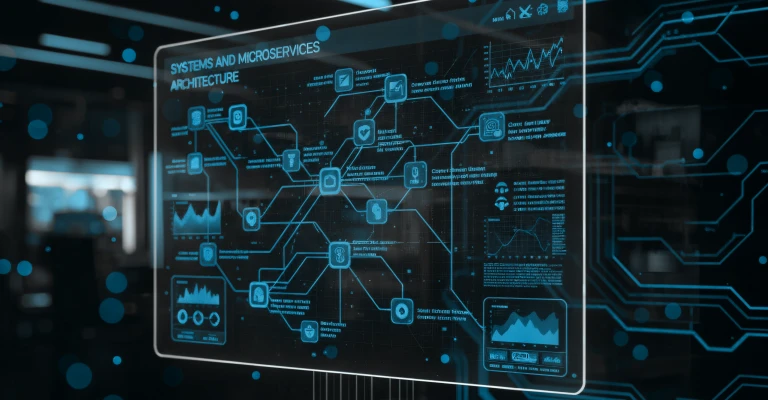
Industry-Specific Monitoring Requirements and Solutions
DS STREAM's experience across FMCG, retail, e-commerce, healthcare, and telecommunications informs industry-specific monitoring strategies addressing unique requirements, drift patterns, and regulatory considerations.
Retail and E-Commerce Monitoring
Retail ML models experience pronounced seasonality, promotional impacts, and rapidly shifting consumer preferences. Our retail monitoring solutions implement seasonal baseline adjustment accounting for expected pattern variations, promotional event tracking correlating model performance with marketing activities, real-time performance monitoring for critical customer-facing models, and segment-specific analysis by product category, customer demographic, and channel. High-frequency monitoring detects issues during critical sales periods when model degradation directly impacts revenue.
Healthcare Monitoring and Compliance
Healthcare ML systems operate under strict regulatory oversight requiring comprehensive monitoring and documentation. DS STREAM's healthcare monitoring solutions implement continuous performance tracking with audit trails, fairness monitoring ensuring consistent care across patient populations, adverse event detection and reporting integration, regulatory reporting capabilities for FDA and other regulators, and clinical validation workflows involving medical professionals. These capabilities ensure healthcare ML systems maintain safety and efficacy while meeting regulatory requirements.
Telecommunications Network Monitoring
Telecom ML models processing network telemetry and customer behavior data face extreme scale and real-time requirements. Our telecom monitoring solutions handle billions of daily predictions with high-throughput monitoring infrastructure, real-time anomaly detection for network optimization and fraud models, geographic segmentation tracking regional performance variations, and integration with network operations centers and incident management systems. Ultra-low latency monitoring ensures rapid response to network issues predicted by ML models.

Technology Integration and Platform Support
DS STREAM's monitoring solutions integrate seamlessly with diverse ML platforms, orchestration tools, and observability infrastructure. Our technology-agnostic approach ensures monitoring capabilities regardless of underlying technology choices.
Cloud Platform Native Monitoring
Cloud ML platforms provide native monitoring capabilities we leverage and extend. Google Cloud Vertex AI Model Monitoring offers managed drift detection and performance tracking. Azure Machine Learning provides data drift detection and model performance monitoring. AWS SageMaker Model Monitor delivers data quality and model quality monitoring. DS STREAM implements these native capabilities where appropriate while extending with custom monitoring for specific business requirements, ensuring comprehensive observability leveraging platform investments.
Open-Source Monitoring Frameworks
For on-premises deployments or organizations preferring open-source solutions, we implement monitoring using frameworks including Evidently AI for drift detection and model quality monitoring, WhyLabs for data quality and drift monitoring, Alibi Detect for outlier and drift detection, and custom solutions built on Prometheus, Grafana, and time-series databases. These open-source implementations provide full control and customization while avoiding vendor lock-in.
Integration with Existing Observability Infrastructure
Organizations have existing observability tools for application and infrastructure monitoring. DS STREAM integrates ML monitoring with these established platforms, exporting metrics to Prometheus, Datadog, New Relic, or Splunk, creating unified dashboards combining ML and infrastructure metrics, integrating alerts with PagerDuty, Opsgenie, or similar incident management tools, and connecting to SIEM systems for security monitoring. This integration provides unified operational visibility spanning traditional infrastructure and ML-specific concerns.